The Habit Cue That Was Already There
Learn how to choose a dependable habit cue, pair it with a routine, and adjust the plan when the moment or setting does not fit.
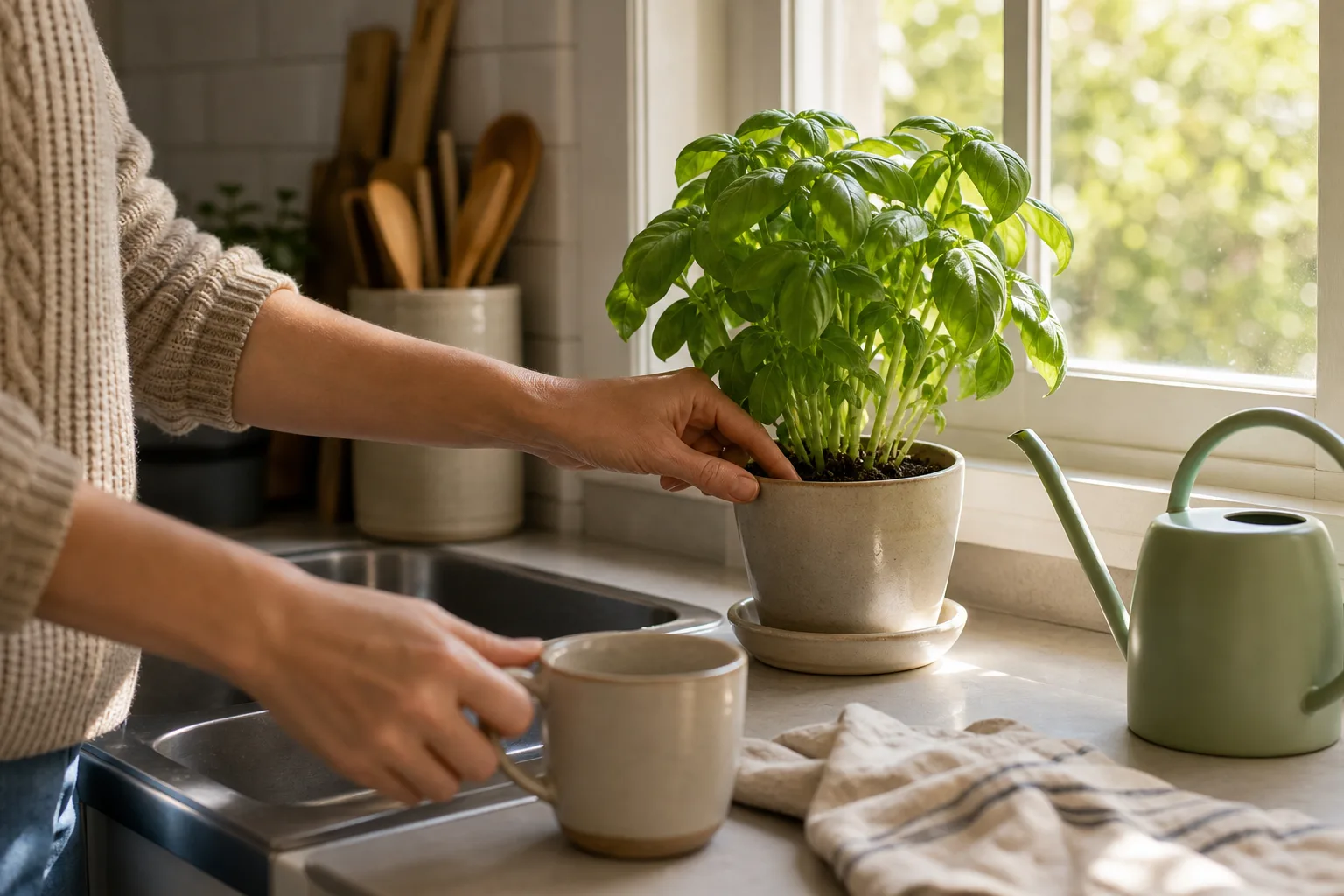
You set your mug beside the sink after breakfast and notice the basil leaves drooping toward the window. If watering the plant is the routine you want, putting the mug away can be a useful habit cue: a familiar event that gives a chosen action a natural place in the day.
A habit cue pairs a familiar event with one action
A cue is something you already do or notice, such as turning off the kettle, hanging up your keys, or opening a paper planner. The routine is the action you connect to it: “After I put away breakfast dishes, I check whether the basil’s soil is dry.”
The cue is not a reminder to return to unfinished work. It is a way to attach a small, chosen action to an ordinary event, such as checking the soil after breakfast or setting out a lunch container after dinner. Its usefulness depends on whether the event and action belong together in the same moment.
Choose an event that happens where the routine belongs
A useful cue is easy to recognize and occurs in a place where the routine can begin. “When I have free time” is vague; “when I hang my coat on the entryway hook” is concrete, provided the action also makes sense in the entryway.
Look for an existing transition: putting away breakfast dishes, closing the curtains at dusk, or setting a cup on the counter after tea. Avoid choosing an event that regularly occurs while you are driving, carrying something fragile, or otherwise unable to do the routine.
If an event happens in several forms, decide which version counts. For example, you might define the cue as hanging your coat on the entryway hook rather than simply arriving home. A more precise cue can make the pairing easier to recognize.
Keep the routine small and specific
Name an action with a visible start and stopping point. “Take care of the plants” can expand into a long round of chores; “check whether the basil’s topsoil feels dry” is bounded and leaves you free to decide what, if anything, it needs.
Put the necessary materials where the action happens. If you check a plant by the kitchen window, keep a small watering can nearby; if you sort receipts at the desk, keep the folder there. The setup should support this routine, not turn into a general project to reorganize the room.
A cue is like a hook by the door: it gives an everyday action a familiar place, but it does not require you to carry out a larger task every time. If conditions do not suit the action, the sensible decision may be to skip it rather than force it.
How can you tell whether the cue fits?
What makes an event dependable enough?
Choose an event you notice in the place where the routine can happen. If it occurs only on unusual days, choose a steadier event or let the routine follow it only when that circumstance arises.
Should the routine happen immediately?
A close connection makes the pairing easier to remember, but the action need not happen at once if the setting is unsuitable. Name the next clear event that creates a fitting moment, such as checking the basil after putting away dishes rather than vaguely planning to do it later.
What should change if you miss the cue?
If the event often passes unnoticed, choose one that is more visible or more consistently part of your day. If you notice it but the routine does not suit the place or moment, change the pairing or move the routine to a setting where it belongs.
When does a second cue help?
A second cue can suit a routine that naturally follows two distinct daily patterns, such as watering a plant after breakfast on weekdays or after a weekend meal. If the alternatives become confusing, keep the clearer cue and let the routine wait for its next fitting occasion.
A worked example matches a cue to the plant’s setting
Imagine you want to check the basil without turning plant care into a larger chore. Your starting point is a plant on the kitchen windowsill, a small watering can stored in a cabinet, and the habit of setting your breakfast mug beside the sink; the intended routine is to touch the soil and water only if it feels dry.
First, you move the watering can beside the windowsill and define the cue as putting away the mug after breakfast. When that event occurs, you touch the soil; if it feels dry, you water the plant, and if it feels damp, you leave it alone. The observable result is a clear decision based on the plant’s immediate condition, while the routine remains limited to that check. If breakfast dishes are usually put away in a different room, choose an event that occurs by the windowsill instead.
Use these observations to adjust the pairing
- Check whether you notice the cue in your ordinary routine; if it often passes unseen, choose a more visible event, otherwise keep the cue and check whether the action fits.
- Check whether the routine can be done where the cue occurs; if not, move the materials to the routine’s actual setting or choose a cue there, otherwise leave the setup as it is.
- Check whether the first action has a clear stopping point; if it keeps expanding, define a smaller action, otherwise keep its current scope.
- Check whether the cue arrives while you are occupied with something that cannot be paused; if so, choose a quieter transition, otherwise retain the event.
- Check whether you recognize the cue but hesitate because the routine feels burdensome; if so, simplify the opening action, otherwise look for a mismatch in place or timing.
- Check whether the event occurs in several forms or locations; if that variation causes uncertainty, name one version or choose a steadier event, otherwise keep the existing cue.
Change one part of the pairing at a time so you can see what suits your routine. A note in a pocket notebook can record whether you noticed the cue and whether the action fit the setting; if writing it down feels like extra work, a brief mental check is enough.
A good habit cue is not merely frequent; it belongs in the same setting and moment as the action. To choose one, identify an event you already recognize, pair it with a small routine, and decide what to change if the two do not fit. The basil’s soil, for instance, calls for a check rather than an automatic splash of water.